 Contact Us
 Investors
 Contact Us
 Investors
Water Treatment
Cooling Water Treatment
Overview
At Dorf Ketal, our success in the petrochemical sector stems from one principle: listening to our customers. By understanding the unique challenges you face in a rapidly evolving production environment, we have developed innovative chemistries and problem-solving services that deliver the performance, efficiency, and reliability your operations demand.
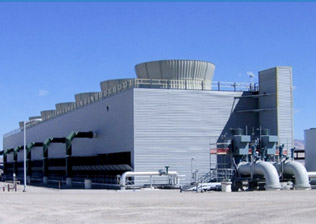
A representative schematic of cooling water system is as below
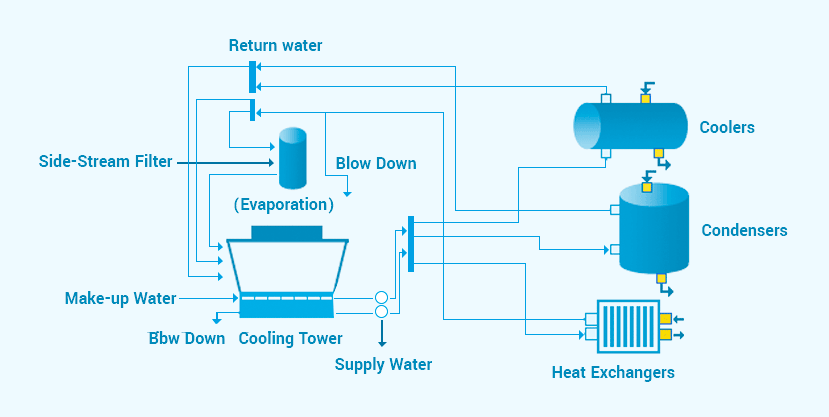
Dorf Ketal provides an extensive range of products and services for open-circulating once-through and closed loop systems. Our technical team does a thorough system survey of the cooling tower system, and our treatment program is based upon the following factors.
Water Chemistry
Types of Microorganisms
System Parameters
System design and metallurgy
Target KPI’s
One of the primary steps to achieve trouble free plant operations is to accurately assess the cooling water system and the critical exchangers associated with it. This assessment is multi-dimensional and covers a majority of operations to have detailed insight supported with recommendations for implementation of best practises in Industry.
It has been Dorf Ketal's philosophy to conduct such a study before recommending or implementing a technically superior Cooling Water Treatment program. The Dorf Ketal assessment service F.I.R.S.T which is to Find. Interpret. Report. Standardize. Train. is an effective tool for a forensic insight into cooling water systems.
F.I.R.S.T which is to Find. Interpret. Report. Standardize.
The F.I.R.S.T support will collect data, conduct root-cause analyses, identify actions which would be measurable and list the customer's relevant KPIs.
Dorf Ketal will deploy a highly competent technical team with in-depth knowledge of Water Management and Operations to review current conditions. This study is proposed in following two phases
Phase I
-
Water Chemistry Trends
-
Corrosion mitigation and monitoring procedures
-
Deposition and fouling control
-
Microbiology and Bio-control
-
Monitoring and treatment approach
-
Root cause analysis of failures, if any
Phase II
Recommendations for improvements in current program and procedures
Design of customised Cooling Water Treatment program. This would include details of product chemistry, mechanism of actions, on site application support service like chemical feed, chemical and microbiological analysis, monitoring of critical KPIs, water conservation and other value added service, the overall implementation of which would lead to the following
Overview
Delivering Performance, Efficiency, and Reliability to the Petrochemical Industry
At Dorf Ketal, our success in the petrochemical sector stems from one principle: listening to our customers. By understanding the unique challenges you face in a rapidly evolving production environment, we have developed innovative chemistries and problem-solving services that deliver the performance, efficiency, and reliability your operations demand.
Corrosion Control
Corrosion Inhibitors are designed for prevention of metal loss in pipelines, headers, critical heat transfer equipment and cooling equipment.
Dorf Ketal has a wide range of both anodic and cathodic inhibitors that are specifically formulated to passivate the metal by reducing the corrosion potential. Some of the chemistries frequently incorporated in the products are based on
-
Orthophosphates
-
Meta/Poly Phosphates
-
Phosphonates
-
Zinc
-
Molybdate
-
Nitrite
-
Silicates
-
Azoles
Scale Control
Due to the many impurities in water, there are possibilities of reduced heat transfer, corrosion, restriction in water throughput and equipment downtime. Tailor made specific scale inhibitor programs are extremely critical for scale and fouling control as well as mineral scale prevention.
Scale/Deposit control agents are also known as dispersants, hardness stabilizers or antifoulants and they work on the following principles
-
Crystal Modification
-
Threshold Treatment
-
Agglomeration of Solids
-
Prevention of accumulation on critical surfaces
Dorf Ketal has a comprehensive range of polymers, polyphosphates, and organic phosphates to control deposits and scale formation.
Microbiological Control
Cooling towers are susceptible to microbiological activity due to the open design and exposure to sunlight. Algae, bacteria, SRB’s and fungi thrive in cooling towers as they have an ideal environment. Inadequate control of microbiology also leads to formation of biolfilm, which is 2.5 times more potent than mineral scales in impairing heat transfer.
Dorf Ketal technical experts do a complete micro study for identifying organisms and evaluate chemistries to adopt a high-kill program. Continuous monitoring of bacterial counts along with visual inspection by Dorf Ketal site staff is a standard process at each customer’s site.
The 3 main product solutions used for microbiological control are
-
Oxidizing Biocides
-
Non-oxidizing Biocides
-
Biodisperants
Oxidizing biocides commonly used are
-
Chlorine
-
Bromine
-
Chlorine Dioxide
-
Ozone
These kill microorganisms by the electrochemical process of oxidation.
Non-oxidizing biocides commonly used are
-
Quaternary ammonium compounds
-
Carbamates
-
2,2, Dibromo-3-nitrilopropanamide (DBNPA)
-
Glutaraldehydes
-
Methylene BisIsothiocynate (MBT)
-
Isothiazolines
-
And many more….
Non-oxidizing biocides kill microorganisms by disrupting the cell wall or preventing reproduction/respiration of the cells.
Biodispersants are used as penetrants into biofilms so that the biocide molecule can kill the microorganism on the metal surface.
Some commonly used biodispersants are
-
Polyamines
-
Ethoxylated Condensates
-
Specific Enzymes
Our comprehensive range of innovative chemistries include a range of corrosion and scale inhibitors, biodispersants and microbiocides, which ensure the following benefits for your system
-
Clean heat transfer surface
-
Reduced water usage
-
Reduced maintenance costs
-
Decreased operating costs
-
Improved safety and minimized risk